 listicle
Benefits of Child-Led Learning in Early Childhood
Last Updated: October 23, 2026
Quick Summary
Child-led learning benefits children by building independence, confidence, and self-regulation as they choose and finish their own tasks, and by growing curiosity, creativity, and problem-solving through open-ended play and trial and error. It works best when adults prepare the environment, observe closely, and pair child choice with intentional teaching rather than stepping back entirely.
- Child-led learning is not unstructured chaos; adults prepare the environment and step in only when needed.
- The adult's role shifts from directing and instructing to observing and arranging the room.
- Intervene only when safety is at stake or when a child asks for help; otherwise observe first.
- At home, offer two acceptable options rather than ten and let children help with real tasks.
- Programs that drop all direct instruction risk leaving gaps in early literacy and math.
Table of Contents
- What Child-Led Learning Means (and What It Doesn't)
- The Core Benefits of Child-Led Learning
- Child-Led Learning Examples You'll See in a Classroom
- Child-Led Learning Activities to Try at Home
- Child-Led Learning vs Teacher-Led Learning
- How Adults Support Child-Led Learning Without Taking Over
- Age-by-Age Guidance and What the Research Actually Shows
- Frequently Asked Questions
What Child-Led Learning Means (and What It Doesn't)
Child-led learning is an approach where children choose what to explore, how to explore it, and for how long, with adults preparing the environment and stepping in only when needed.
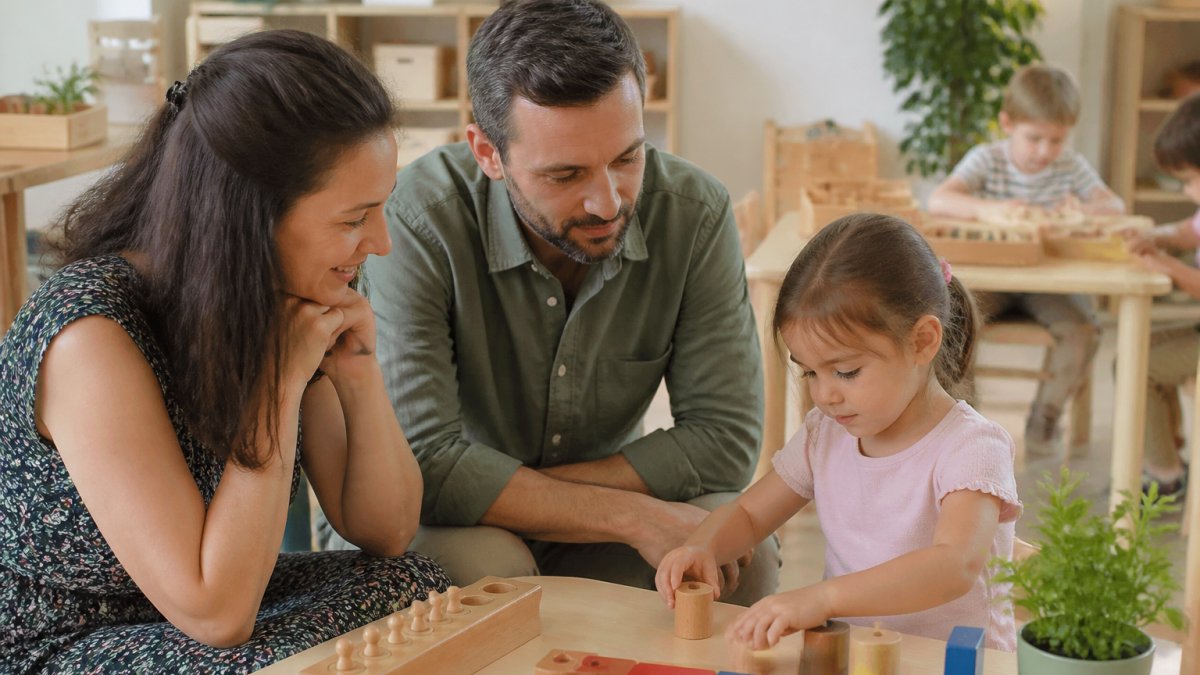
That distinction matters more than most parents realize. At Maria's Meadow Montessori School, we see the difference every day: a child who picks her own work from an open shelf is practicing decision-making, while a teacher quietly tracks what she chooses and where she struggles.
The National Association for the Education of Young Children describes how playful, child-directed learning builds initiative, independence, and problem-solving skills, and links it to social and emotional growth (NAEYC on playful learning in early childhood).
What it doesn't mean: no limits, no materials, no adult expertise. A child-led room still has structure. It just belongs to the child.
The Core Benefits of Child-Led Learning
The benefits of child led learning show up in two clusters: how children see themselves, and how they think. Both matter for kindergarten readiness and long after.
Independence, Confidence, and Self-Regulation
When a child chooses her own task and finishes it, she learns something no adult can hand her: "I can do this." That repeated experience builds self-confidence and autonomy faster than praise does.
Self-regulation grows the same way. A child who picks a challenging puzzle and sticks with it practices patience, frustration tolerance, and focus. Adults who intervene too quickly rob children of that practice. The research base here is broad: the U.S. Department of Health and Human Services notes that high-quality early care and education supports learning and development across income levels, dual-language learners, and children with disabilities (HHS report on early care and education benefits).
Curiosity, Creativity, and Problem-Solving
Curiosity is the engine. A child who asks "what happens if I do this?" is running an experiment, and child-led play gives him room to finish it.
Creativity and imagination flourish when the materials are open-ended and the outcome isn't prescribed. Problem-solving and critical thinking develop through trial and error, not through worksheets. Intrinsic motivation, the kind that keeps a child learning without a reward chart, grows from genuine interest.
That's the case for child-led learning in one sentence: it builds the learner, not just the lesson.
Child-Led Learning Examples You'll See in a Classroom
Walk into a well-run child-led classroom and the first thing you notice is the quiet. Children are working, not waiting. The second thing you notice, once you sit for ten minutes, is how much the adult is doing without saying much.
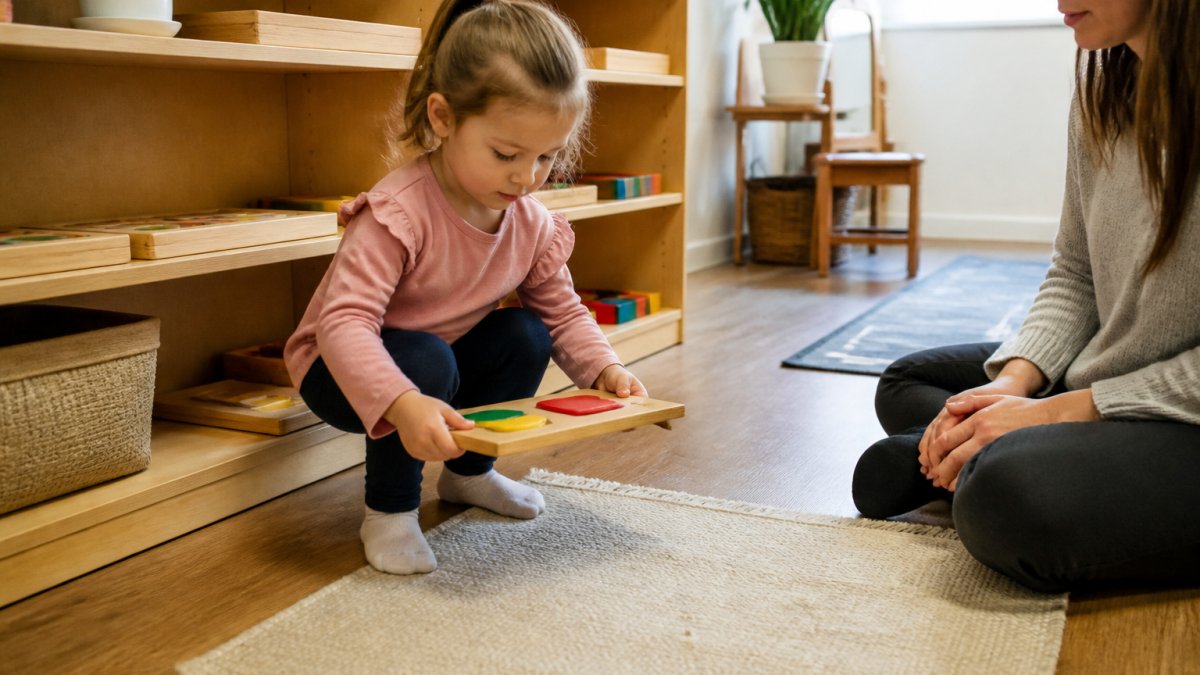
Here are child-led learning examples you'll recognize, paired with what the adult is actually doing in each one:
- A four-year-old carries a wooden puzzle to a small rug and works alone until it's solved. The teacher observes from a low chair, notes how long the child persists and where the frustration spikes, and does not touch the puzzle. If the child asks for help, the teacher models one piece and steps back.
- Two children negotiate turns with a set of measuring cups at the water table. The teacher stays within earshot but out of the conversation. If the negotiation stalls into grabbing, the teacher names the problem ("You both want the blue cup") and lets the children propose a solution before offering one.
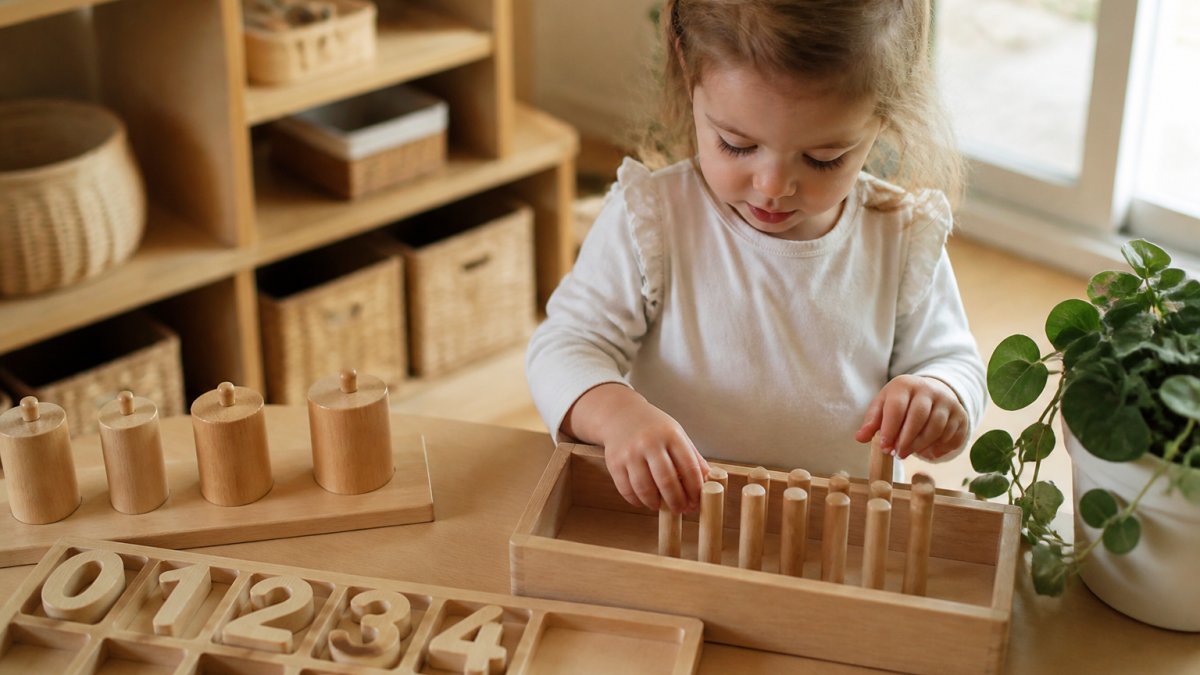
- A five-year-old chooses practical life work, pouring and transferring, for twenty minutes straight. The teacher has prepared the tray so the pitcher is small enough for a child's hand and the spill cloth is within reach. The child can fail without an adult rescuing the moment.
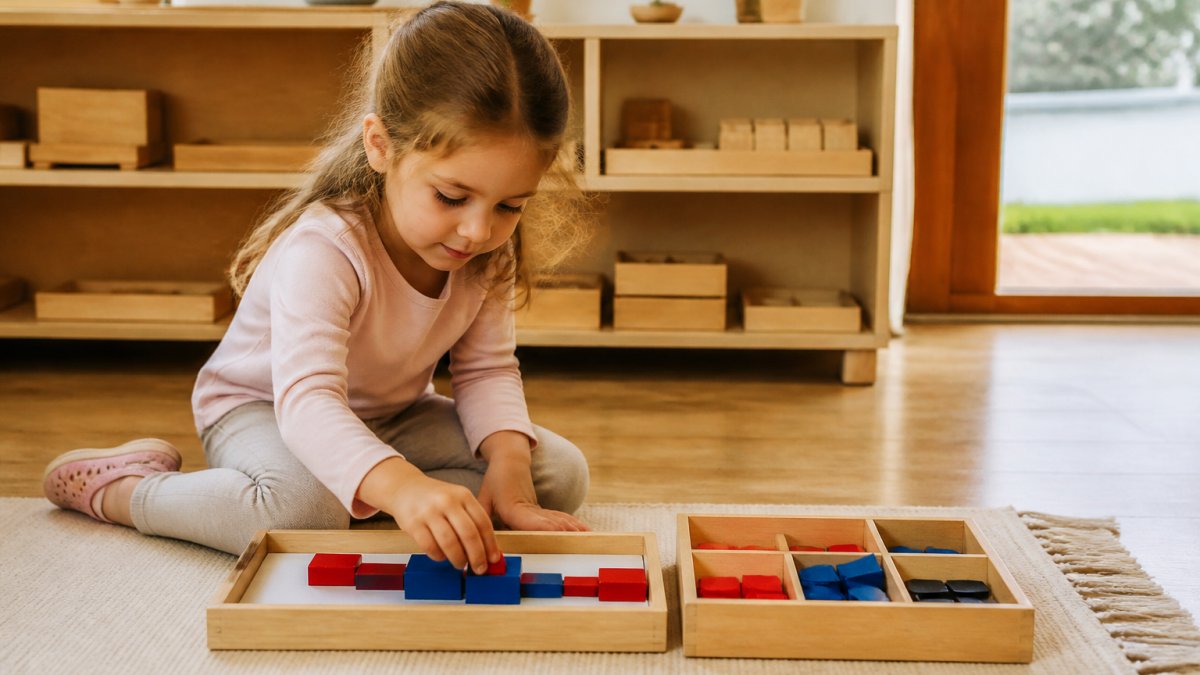
- A child returns a material to the shelf and selects the next one without prompting. The teacher watches the sequence, because the choice of what comes next is data: does the child return to a mastered task, reach for something new, or wander?
- A three-year-old abandons a task after two minutes and moves to the block corner. The teacher does not chase the child back. Over the next week, the teacher watches whether the pattern repeats and adjusts the shelf so the abandoned material is easier to enter.
The teacher's job in these moments is observation first, correction last. That's the part most guides miss: the room looks unstructured, but the environment is deliberately prepared so a child's choice leads somewhere productive.
A useful way to read any classroom: watch the adult's hands. In a child-led room, adult hands are busy before children arrive (preparing, rotating, repairing materials) and mostly still once children are working.
Child-Led Learning Activities to Try at Home
You don't need a classroom to practice this. The best child-led learning activities are cheap, open-ended, and easy to set up.
- Open shelf, low reach: Put a few toys or art supplies where your child can reach them without asking
- Choice within limits: Offer two acceptable options, not ten
- Real tasks: Let your child help pour, wipe, sort, or carry something breakable but manageable
- Unstructured outdoor time: Sticks, water, dirt, and time
- Follow the interest: If your child is obsessed with bugs, buy a magnifier instead of a workbook
Child-Led Learning vs Teacher-Led Learning
The child-led learning vs teacher-led learning debate is often framed as a contest. It isn't. Each approach has real strengths, and the best early childhood programs blend them.
| Dimension | Child-Led Learning | Teacher-Led Learning |
|---|---|---|
| Who chooses the activity | The child | The teacher |
| Adult role | Prepares environment, observes | Directs instruction, sets pace |
| Strength | Autonomy, curiosity, intrinsic motivation | Efficient coverage of fundamentals |
| Risk | Gaps if adults don't track progress | Low engagement, less initiative |
| Best for | Exploration, independence, creativity | Introducing new skills, group routines |
The honest answer: young children need both. A child who only follows his own interests may miss foundational skills; a child who only follows directions may never learn to choose.
How Adults Support Child-Led Learning Without Taking Over
The hardest skill in this approach is knowing when to step back. Adult guidance and adult interference look similar from the outside, but they produce opposite results.
Support looks like preparing the environment, modeling a technique once, asking an open question, and then leaving. Interference looks like correcting mid-task, finishing a puzzle for a frustrated child, or redirecting a child toward what you'd rather he do.
A useful rule: intervene when safety is at stake or when a child asks for help. Otherwise, observe first. A child who is struggling productively is learning more than a child who is being rescued.
Age-by-Age Guidance and What the Research Actually Shows
The evidence for child-led learning is encouraging but not as tidy as marketing suggests. Much of the research links high-quality early care and education to developmental gains without isolating child-led methods alone.
What the evidence does support, broadly: play-based and child-directed approaches are associated with gains in initiative, self-regulation, and social skills, and high-quality early programs show benefits across income levels and for dual-language learners and children with disabilities.
Age changes the picture more than most guides admit:
- Infants (under 18 months): "Choice" is mostly about attention and movement. The adult follows the baby's gaze, offers one or two objects at a time, and narrates sparingly. The prepared environment is a safe floor space with a few reachable materials, not a shelf of options.
- Toddlers (18 months to 3 years): Choice is narrow. Two acceptable options, short tasks, and lots of modeling. The adult sets the boundary ("You may pour water or you may stack cups") and lets the child pick within it. Frustration tolerance is short, so the adult stays close and scaffolds rather than rescues.
- Preschoolers (3 to 5 years): Longer focus, more independent selection, simple practical life work. The adult rotates materials based on observed interest, introduces one new skill at a time, and begins asking the child to plan ("What will you need?") before starting.
- School-age (5 to 8 years): Multi-step projects, planning, and reflection on what was learned. The adult shifts toward project coaching: helping the child break a big interest into steps, check progress, and decide when a project is finished. Direct instruction becomes more appropriate here for foundational reading and math, layered around child-chosen work rather than replacing it.
Inclusion and accessibility deserve their own note, because a wide-open room is not automatically accessible.
Measuring outcomes matters too, and it does not require turning play into a test. Practical observation prompts a teacher or parent can use:
- How long did the child stay with a self-chosen task this week compared with last month?
- Did the child ask for help, try a new strategy, or abandon the task, and in what order?
- Did the child return to a mastered activity or reach for something new?
- How did the child handle a peer conflict without an adult stepping in?
- What did the child choose after finishing, and what does that choice suggest about interest?
A simple running log, a few notes a week, and a photo of the child's work are enough to see progress in concentration, initiative, and self-regulation without formal testing.
Frequently Asked Questions
What is the difference between child-led learning and teacher-led learning?
In child-led learning, the child chooses what to work on and how long to stay with it, while the adult prepares the environment and observes. In teacher-led learning, an adult sets the topic, pace, and sequence for the whole group. Most strong early childhood programs blend both: the National Association for the Education of Young Children notes that playful, child-directed learning builds initiative and problem-solving, and that skilled teachers still guide it. The balance shifts toward more direct instruction as children approach kindergarten.
What are examples of child-led learning activities?
Common child-led learning activities include choosing a practical life task such as pouring water or buttoning a frame, building with open-ended blocks, sorting natural objects collected outside, and deciding which book to revisit. At home, try a low shelf with three or four accessible options, a basket of real kitchen tools for supervised food prep, and unhurried outdoor time. The key is that the child picks the activity and the adult follows their interest rather than redirecting it.
My child is shy and anxious in unstructured settings. Can child-led learning still work?
Yes, and it often helps. Child-led learning is not the absence of structure; it is a prepared environment with clear shelves, defined work spaces, and predictable routines. For a child with sensory sensitivities, that predictability lowers the load while still letting them choose. Ask any program how teachers support a child who watches before joining, and whether they allow a quiet observation period. A good classroom treats watching as legitimate participation, not a problem to fix.
How does Montessori support child-led learning?
Montessori classrooms are built around it. Materials sit on low open shelves the child can reach, work cycles run long enough for deep concentration, and teachers demonstrate lessons rather than lecture. The U.S. Department of Health and Human Services notes that high-quality early care and education supports learning and development across income levels, dual-language learners, and children with disabilities. When you tour a school, look for uninterrupted work time, mixed-age groupings, and teachers who observe more than they direct.