 ultimate-guide
Is Montessori Enrollment for 2026 Worth It?
Last Updated: October 26, 2026
Quick Summary
Montessori enrollment for 2026 is a moving window that varies by school, so applying early secures your queue position. Some schools run fixed windows, like January 5 through March 19, 2026, while others review applications on a rolling basis beginning February 1, 2026. Plan as if your target school uses the tighter model.
- Start your admissions timeline in fall 2025 and confirm a seat by early spring 2026.
- Most schools complete the application sequence within eight to twelve weeks.
- Gather immunization and health forms first, since they most often delay submissions.
- Waitlist activity clusters in March and April as families decline offers and relocate.
- Never trade a confirmed seat for an uncertain waitlist position.
Table of Contents
- Why 2026 Montessori Enrollment Rewards Early Movers
- Your Montessori Admissions Timeline for the 2026-27 School Year
- Age Eligibility and Classroom Placement
- The Montessori School Application Process, Step by Step
- Montessori School Tour Questions That Reveal the Real Program
- Montessori School Tuition and Fees: What Families Actually Pay For
- Decisions, Waitlists, and Confirming Your Seat
- Start Your Maria's Meadow Enrollment This Week
- Frequently Asked Questions
Why 2026 Montessori Enrollment Rewards Early Movers
Montessori enrollment for 2026 is not a single date but a moving window that varies by school, and families who understand that distinction get the seats. Some schools run fixed open-enrollment periods; others review applications on a rolling basis months before the fall term.
The stakes are concrete. The Montessori School of CU admissions page states that new-student applications for the 2026-2027 school year are reviewed on a rolling basis beginning February 1, 2026.
Rolling Admissions vs. Fixed Windows
Fixed-window enrollment sets a defined period. The MRC SERIE enrollment FAQ lists open enrollment for the 2026-27 school year as January 5 through March 19, 2026.
Rolling admissions accepts applications year-round and fills seats as they open.
For 2026, plan as if your target school uses the tighter of the two models. You lose nothing by applying early and gain a queue position.
Your Montessori Admissions Timeline for the 2026-27 School Year
A working admissions timeline for the 2026-27 year starts in the fall of 2025 and ends with a confirmed seat by early spring 2026. Treat the dates below as a planning frame and confirm each against your specific school, because published schedules genuinely differ.
| When | What to Do | Why It Matters |
|---|---|---|
| Sept-Oct 2025 | Shortlist 3-5 schools, request info packets | Tour slots fill first |
| Nov 2025 | Attend tours and observation visits | You need comparison time |
| Dec 2025 | Collect documents, request recommendations | Records requests are slow |
| Jan 2026 | Submit applications as windows open | Fixed windows can close in March |
| Feb-Mar 2026 | Parent interviews, child visits, decisions | Rolling review starts in February at many schools |
| Mar-Apr 2026 | Accept seat, pay deposit, confirm | Waitlist movement happens here |
The most common mistake is treating the application as the start of the process. It is the middle: tours and document gathering happen before it, and both take longer than parents expect.
Age Eligibility and Classroom Placement
Age eligibility for Montessori programs is usually a range rather than a hard cutoff, and placement depends on developmental readiness as much as birth date.
That mixed-age design is not incidental: younger children watch older peers complete work, and older children reinforce their own understanding by teaching.
Ask two questions directly: what is the exact birth-date window for the classroom my child would enter, and how do you handle a child who is ready academically but young for the group? Schools that answer both specifically have thought about placement; vague answers mean improvising.
For families weighing a preschool start against waiting another year, the practical rule is simple.
The Montessori School Application Process, Step by Step
The Montessori school application process typically runs five steps: inquiry, tour, written application, parent interview or child visit, and a decision with a deposit. Most schools complete the sequence within eight to twelve weeks; rolling-review schools may move faster.
Here is the order that works:
- Inquiry. Submit the online form or call. This puts you on the school's contact list for open-house notices.
- Tour. Visit during a session, not after hours. You are evaluating the room, not the lobby.
- Application. Complete the form, pay the application fee, and submit records. Fees are usually non-refundable and separate from tuition.
- Parent interview and child visit. The school is assessing fit, and so are you. Ask what a typical morning looks like for a child who is struggling.
- Decision and deposit. An offer usually comes with a deadline. A deposit holds the seat and is generally applied to tuition.
Required Documents Checklist
- Completed application form
- Application fee payment
- Copy of the child's birth certificate
Gather the immunization and health forms first. They most often delay a submission, because they require a pediatrician's office to respond on its own schedule.
Montessori School Tour Questions That Reveal the Real Program
The best Montessori school tour questions probe teacher training, classroom structure, and how the school handles a child who does not fit the brochure.

Bring these:
- What Montessori credential do your lead teachers hold, and from which training program?
- Is the school accredited, and by whom?
- How long do children stay with the same guide across the three-year cycle?
That last question matters more than parents expect. To see a classroom in session before you commit, schedule a tour and watch how the room actually runs.
Montessori School Tuition and Fees: What Families Actually Pay For
Montessori school tuition and fees vary widely by region, program length, and whether the school is independent or public. Rather than publish a single misleading figure, this section maps the cost architecture every family should build before applying, the line items that surprise parents, and the questions that turn a headline tuition number into a real annual budget.
The Five Cost Buckets
Every Montessori fee schedule can be sorted into five buckets. Ask each school to break its schedule down this way, in writing.
- Tuition. Usually quoted annually or monthly, and often priced differently for half-day versus full-day and primary versus elementary. It is the largest line but rarely the only one.
- One-time admissions costs. Application fee (typically non-refundable, paid before review) and enrollment or registration deposit (typically holds the seat and is applied to tuition).
- Recurring program fees. Materials, activity, technology, and supply fees. Some schools bundle these into tuition; others bill separately each term.
- Care and enrichment add-ons. Before-care, after-care, enrichment classes, and summer programs. These most often turn a manageable tuition into a strained budget.
- Payment-plan costs. Installment plans may carry a service fee, and some schools offer a discount for paying annually in full. Ask for the exact terms.
What to Ask For in Writing
Before you compare schools, request the full fee schedule and the enrollment agreement. Then ask these questions:
- Is tuition all-inclusive, or are materials and activity fees billed separately?
- What is the deposit amount, and is it refundable under any circumstance?
- What are the payment-plan options, and do installments carry a fee?
Financial Aid and Payment Schedules
Many independent Montessori schools offer need-based financial aid, and the aid application usually has its own deadline earlier than the admissions deadline. Aid is typically assessed through a third-party service that collects family financial information, and awards are usually communicated alongside or shortly after the admissions decision.
Payment schedules vary: annual-in-full, two-payment, and ten- or twelve-month installments are common. Confirm whether the plan is administered by the school or an outside tuition-management provider, because the provider's terms govern late fees and defaults.
How to Compare Total Annual Cost
To compare schools honestly, build one annual number per school: tuition + one-time admissions costs (amortized over the years you expect to attend) + recurring program fees + extended care + any payment-plan fee − financial aid. Headline tuition is rarely the real figure, and the school with the lower tuition can be the more expensive choice once care and fees are added.
Decisions, Waitlists, and Confirming Your Seat
An admissions decision usually arrives as one of three outcomes: an offer, a waitlist position, or a decline. What separates a calm spring from a chaotic one is how you handle each outcome.
Reading the Three Outcomes
- Offer. Comes with a response deadline, often one to two weeks, and a deposit that secures the seat. The offer letter should state the deposit amount, the deadline, and the enrollment agreement terms.
- Waitlist. A queue position, not a rejection. Ask two questions: where am I on the list, and do you rank by application date or by fit? The answer tells you whether a check-in is useful.
- Decline. Ask, politely, whether the decision was about space or fit. The answer shapes whether reapplying next cycle makes sense.
Managing Multiple Offers and Deposits
If you hold more than one offer, compare total annual cost (see the tuition section), not just tuition, and confirm each school's deposit-refund terms before you commit. Paying a deposit at two schools to "keep options open" can mean forfeiting one outright, since deposits are frequently non-refundable. Read the enrollment agreement before you sign, especially the withdrawal clause and notice period.
How Waitlists Actually Move
Waitlist activity clusters in March and April, when families decline offers, relocate, and change plans. Movement is driven by yield: schools admit more students than they expect to enroll, and when yield comes in low, they turn to the waitlist.
A short, polite check-in email in early April is appropriate. Daily calls are not. If you are waitlisted at your first choice and hold a seat elsewhere, accept the seat you have and stay in touch with the waitlist school.
Confirming Your Seat: The Checklist
Once you accept an offer, the enrollment confirmation usually requires:
- Signed enrollment agreement
- Deposit payment
- Updated immunization and health forms
Return these by the stated deadline. Missing a confirmation deadline can cost you the seat even after an offer.
Preparing for the First Day
Once your seat is confirmed, the work shifts to preparation. A child who visits the classroom, meets the guide, and practices the morning routine in advance settles faster in September. Our guide to preparing your child for a Montessori transition walks through that handoff step by step.
Start Your Maria's Meadow Enrollment This Week
The families who feel calm in September are the ones who moved in January. If you are comparing programs for the 2026-27 year, our 2026 guide to choosing the right preschool covers what to weigh beyond the tour.
At Maria's Meadow Montessori School, we are open and enrolling now, and we would rather answer your questions in person than have you guess from a website.
Get started with Maria's Meadow Montessori School and explore our programs and schedule a tour this week.
Frequently Asked Questions
When should I apply to a Montessori school for 2026?
Start now, not in the spring. Published 2026-27 schedules show how much timelines vary: one school opens enrollment January 5 and closes March 19, 2026, while another begins rolling review of new-student applications on February 1, 2026. Schools that accept applications year-round can still carry waiting lists of up to nine months for some programs. Submitting your application and booking a tour in the fall or early winter gives you the best shot at the classroom and schedule you want.
What is the application process for a Montessori school?
Most Montessori school application processes follow the same shape: attend a tour or information session, submit an application with the required documents, pay the application fee, and complete a parent interview and child observation. Some schools then hold a lottery, as Eduardo Mata Montessori School does, while others review files on a rolling basis. Ask each school which step decides admission and which is just a formality, so you know where to focus your energy.
What should I look for when touring a Montessori school?
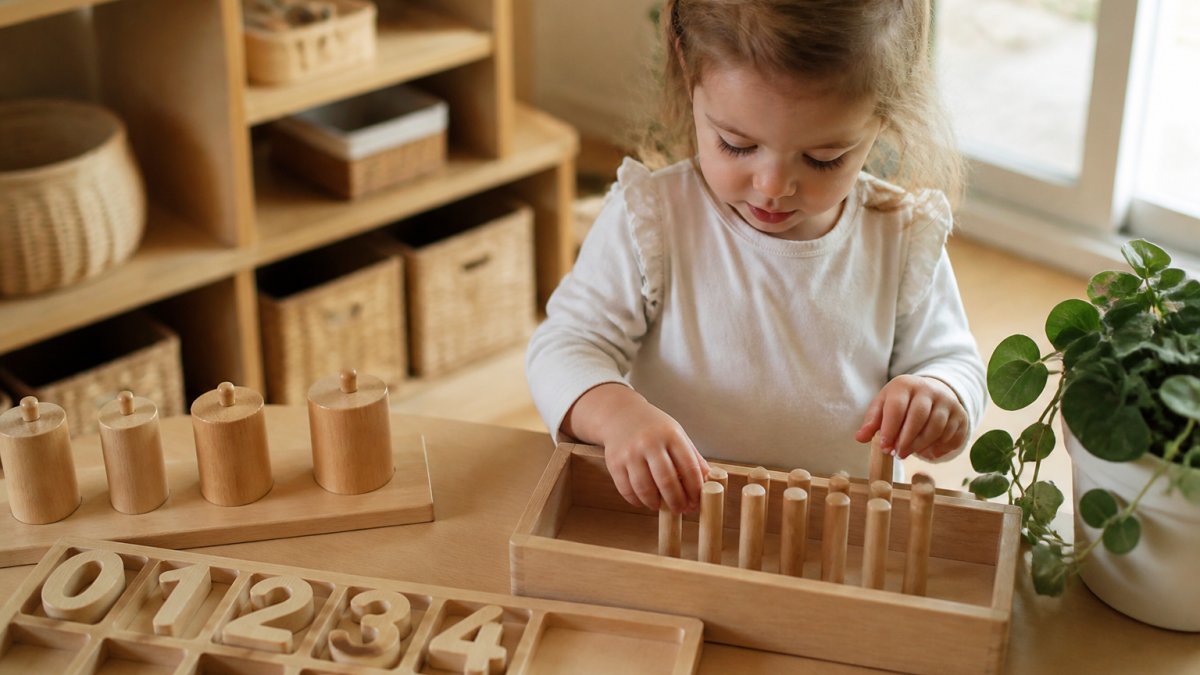
Look at the classroom, not the brochure. You want low, open shelves children can reach themselves, mixed-age groupings, few plastic toys, and teachers who observe rather than lecture. Ask about teacher training and accreditation, how the three-year cycle works, and how the school handles a shy or sensory-sensitive child. Maria's Meadow welcomes prospective families to visit and see the environment in action before committing, which tells you more than any marketing page.
How much does Montessori school tuition cost?
Tuition varies widely by school, program length, and age group, so no single figure applies. Rather than quoting a headline number, ask each school for a full breakdown: tuition, application fee, deposit, payment schedule, and any materials or activity fees. Also ask whether financial aid exists and how to apply. Pricing depends on quantity, dates, and delivery, so we recommend visiting our website for current prices or to request a quote.
What if my child is shy or has sensory sensitivities?
Montessori classrooms are structured even when they look free. The day follows a predictable rhythm, materials are presented one at a time, and the environment is calm and uncluttered, which often suits anxious or sensory-sensitive children well. The key is the teacher. During your tour, ask how the school supports a child who needs extra transition time or a quiet space, and ask to speak with a teacher who has done it.
Do Montessori children learn reading and math fundamentals?
Yes, through materials rather than worksheets. Montessori classrooms teach phonics, handwriting, counting, and place value using hands-on tools, and the mixed-age setting means older children model skills for younger ones. Ask to see the language and math shelves during your tour, and ask how the school tracks progress and communicates it to parents. A strong program can show you exactly how fundamentals are covered.