 how-to
9 Ways to Prepare Your Child for a Montessori Transition
Last Updated: October 25, 2026
Quick Summary
Preparing your child for a montessori transition works best when it starts early, stays calm, and focuses on familiarity. Visit the classroom before day one and practice the morning routine at home two weeks ahead so your child does the steps themselves. A montessori transition asks kids to do more for themselves, and that shift goes better with practice.
- Schedule a classroom tour before the first day and keep the visit to twenty to thirty minutes.
- Practice the real morning routine two weeks early, letting your child manage the steps.
- Pack only what your child can open, carry, and put away alone, like slip-on shoes.
- Keep drop-off short and cheerful, and never sneak out, which teaches distrust.
- Ask whether teachers are Montessori-trained and how the school handles sensory needs.
Table of Contents
- Start the Montessori Transition With a Visit and a Routine
- Montessori School Transition Tips That Actually Work
- Montessori First Day Preparation: What to Pack and Practice
- Handling Montessori Separation Anxiety Without a Struggle
- Questions to Ask a Montessori Teacher Before Enrollment
- Supporting a Child With Sensory Needs Through the Transition
- Book a Classroom Visit at Maria's Meadow Montessori School
- Frequently Asked Questions
Start the Montessori Transition With a Visit and a Routine
Preparing a child for a Montessori transition works best when it starts early, stays calm, and focuses on familiarity. At Maria's Meadow Montessori School, we see the smoothest first weeks come from families who visit the classroom before day one and practice the morning routine at home. A Montessori transition is the shift from home or a traditional daycare into a child-led classroom, and it asks kids to do more for themselves. That shift goes better with practice.
Here is what most guides get wrong: they treat the first day as the finish line. It isn't. The weeks before it matter more.
Tour the Classroom Before the First Day
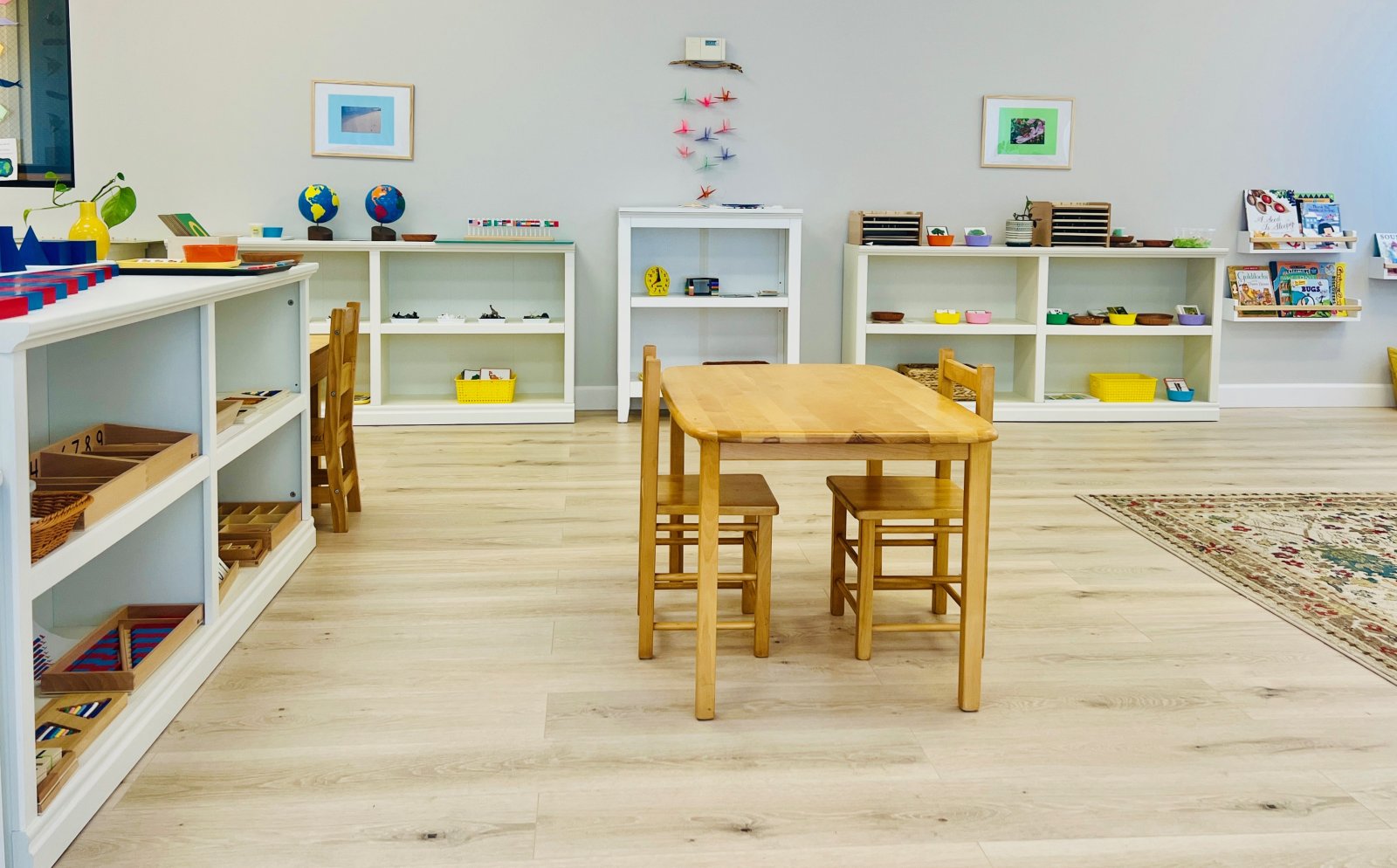
A classroom visit turns the unknown into something your child can picture. Schedule a tour when the room is set up and quiet. Let your child touch the shelves, find the cubby, and meet the teacher by name.
Keep the visit short. Twenty to thirty minutes is plenty. Then leave while things still feel good.
Practice the Morning Routine Two Weeks Early
Two weeks out, run the real morning on repeat. Wake at the school time, eat breakfast at the same pace, and practice getting shoes and a bag ready.
The goal is simple: your child does the steps, not you. A common mistake is rushing the routine on day one after weeks of sleeping in.
Here are the two early steps that make the biggest difference before day one.
| Step | What to do | Timing |
|---|---|---|
| Tour the classroom | Touch shelves, find cubby, meet teacher by name | Before the first day |
| Keep the visit short | Leave while things still feel good | Twenty to thirty minutes |
| Practice the morning routine | Wake, eat, and get shoes and bag ready | Two weeks early |
| Let your child do the steps | Child manages the routine, not you | Every practice morning |
Montessori School Transition Tips That Actually Work
The best Montessori school transition tips share one theme: build independence in small, low-pressure steps. Kids settle faster when they already know how to hang a coat, open a lunchbox, and ask a teacher for help.
Try these:
- Name the feelings out loud, then move on to a plan
- Practice goodbye at home, then at the door
- Keep drop-off short and cheerful
- Let your child carry their own bag
- Read a school-themed book the week before
What most guides miss is the goodbye itself. A long, teary goodbye teaches a child that leaving is scary. A quick, warm one teaches that you always come back.
For a deeper look at how child-led learning builds this kind of confidence, our guide on the benefits of child-led learning in early childhood explains why Montessori classrooms ease separation over time.
Montessori First Day Preparation: What to Pack and Practice
Montessori first day preparation comes down to two things: pack what your child can manage, and practice the skills they'll use. Skip the fancy gear. Choose items a young child can open, carry, and put away alone.
Pack light:
- A change of clothes in a bag your child can open
- A lunchbox with easy-to-open lids
- Slip-on shoes, no laces
- A small water bottle
- Nothing valuable or hard to replace
Practice Self-Help Skills at Home
Self-help skills are the real first-day prep. In the weeks before, let your child practice pouring water, wiping a spill, and putting on their own jacket.
Yes, it takes longer. That's the point.
If you want simple activities to build these skills, our guide to Montessori activities for toddlers has hands-on ideas you can start this week.
Handling Montessori Separation Anxiety Without a Struggle
Montessori separation anxiety is normal, and it usually fades within the first few weeks. The fix isn't to avoid the goodbye. It's to make it short, predictable, and warm.
A few things that help:
- Create a goodbye routine: hug, wave, same words each time
- Tell your child when you'll return, using a real marker like after lunch
- Hand them to the teacher, not the room
- Don't sneak out, which teaches distrust
- Expect a rough first week, then improvement
Watch out: lingering at the door to check on your child usually makes the crying last longer, not shorter. Trust the teacher's routine.
Questions to Ask a Montessori Teacher Before Enrollment
Asking the right questions tells you whether a school runs real Montessori or just uses the name. Ask directly, and listen for specifics.
Good questions to ask a Montessori teacher:
- Are your teachers Montessori-trained, and where?
- How do you handle a shy or cautious child?
- How much choice do children get each day?
- How do you support kids with sensory needs?
- What does a typical day look like?
- How do you keep families updated?
For a full checklist on weighing schools, see our guide to choosing the right preschool.
Supporting a Child With Sensory Needs Through the Transition
Kids with sensory sensitivities can thrive in Montessori, but they need a teacher who plans for it. Ask how the classroom handles noise, transitions, and busy periods.
What helps:
- Visit during a quiet time first
- Share what calms your child with the teacher
- Practice transitions with a visual schedule at home
- Keep drop-off short and consistent
A calm, prepared teacher makes the biggest difference here. Ask about it before you enroll.
Book a Classroom Visit at Maria's Meadow Montessori School
The best way to prepare for a Montessori transition is to see the classroom for yourself. Maria's Meadow Montessori School is open and enrolling, and we welcome families who want to watch a real Montessori day in action. Our teachers are ready to answer your questions about routines, sensory needs, and what the first weeks look like. Schedule a tour at Maria's Meadow Montessori School and see the environment your child will grow in.
Frequently Asked Questions
How long does it take a child to adjust to a Montessori transition?
Most children settle into a Montessori classroom within two to four weeks, though the timeline varies by age and temperament. Teachers routinely adjust instruction to meet children where they are during transitions, which supports a gradual settling-in period. Expect some uneven days in the first month: one child may dive into practical life work immediately while another watches from the edge of the room for a week. Ask the teacher for a short check-in at the two-week mark so you can compare notes.
What should I tell my child before their first day at Montessori?
Keep it concrete and short. Describe what the room looks like, the names of the teachers, and one or two activities they will recognize, such as pouring water or working with puzzles. Avoid promising specific outcomes like 'you'll make lots of friends' because the child may measure the day against that. Instead, say something like 'You'll choose your own work, and your teacher will show you how.' Rehearse the goodbye routine out loud the night before so the child knows exactly what will happen at drop-off.
How can I ease Montessori separation anxiety in the first weeks?
Build a goodbye ritual that lasts under a minute: a hug, a handoff to the teacher, and a wave from the door. Do not sneak out, because that erodes trust and makes the next drop-off harder. Practice short separations at home in the weeks before school starts, such as leaving the child with a grandparent for an hour. If your child has sensory sensitivities, tell the teacher in advance about triggers like loud noise or crowded entryways, and ask whether a quieter arrival time is possible.
What questions should I ask a Montessori teacher before my child starts?
Ask how the teacher handles a child who is shy or slow to choose work, how the classroom is set up for sensory needs, and what the daily routine looks like from arrival to dismissal. Request specifics on how progress is shared with families and how the school handles a child who is ahead or behind in reading and math. Montessori teachers adapt instruction to individual challenges, so ask for an example of how that plays out in the classroom. Also ask about the cancellation policy before you sign.
Every child settles at their own pace, and a rocky first week doesn't mean the fit is wrong. If you want a calm, child-led start, Maria's Meadow Montessori School offers a nurturing Montessori classroom, teachers who plan for shy and sensory-sensitive kids, and a warm community from day one. Get started with Maria's Meadow Montessori School and give your child a confident first step.